Second Major Fire at Our Neighbouring Waste Facility:
August 26, 2026
A Reminder of the Importance of Safety and Resilience

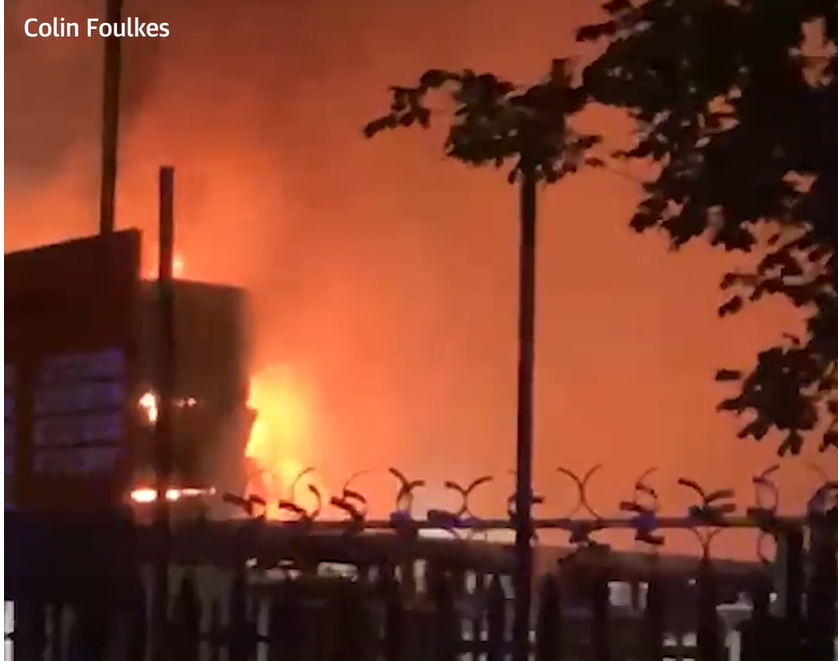
On 18 August 2026, a major fire broke out at the waste facility on Landmann Way in Deptford,
neighbouring Quantum Waste's operations. It was the second significant fire at the site in less than
three months, following an earlier incident in June.

According to the London Fire Brigade, approximately **100 firefighters and 15 fire engines**
responded to the latest incident, which involved around **50 tonnes of stored household waste**. The
structure of the facility was severely damaged, nearby railway lines were temporarily closed as a
precaution, and residents and businesses in the surrounding area were affected by significant smoke.
The fire was brought under control during the early hours of 19 August, although crews remained on
site afterwards to extinguish remaining pockets of fire. The cause has not yet been established.

A Second Incident With a Very Different Outcome for Quantum Waste
For us at Quantum Waste, these incidents are particularly significant because they happened
immediately beside our operations.

During the first major fire in June, the impact was direct. One of our vans was destroyed as the fire
spread beyond the neighbouring facility. The London Fire Brigade reported that the June incident
involved a large quantity of refuse and part of a warehouse roof, with a van and a car destroyed and
one person treated at the scene.

Fortunately, no injuries were reported during the August incident, which is the most important
outcome. While our operations were once again disrupted due to the proximity of the fire, Quantum
Waste suffered no material losses on this occasion.

Experiencing two major incidents within such a short period highlights how quickly a fire at a waste
facility can affect neighbouring businesses, local infrastructure and the wider community.

Fire Safety Across the Waste Industry
Waste and recycling facilities present particular fire-management challenges because large quantities
of different materials can be stored and processed in relatively concentrated areas. Once a fire
becomes established within stored waste, extinguishing it can require considerable time, specialist
equipment and emergency-service resources.

The scale of the response on Landmann Way demonstrates this clearly. Firefighters used both 32-
metre and 64-metre turntable ladders as water towers to tackle the August fire from above, while
approximately 100 firefighters worked in difficult conditions.

The incident also comes at a time when the London Fire Brigade has repeatedly highlighted the fire
risk associated with incorrectly discarded lithium-ion batteries. Other waste-facility fires in London
during 2026 have been attributed to damaged lithium-ion batteries, which can ignite if crushed or
damaged during waste handling. Importantly, however, **there is currently no confirmed evidence
that a battery caused either of the two Landmann Way fires**.

Prevention Starts Before Waste Reaches a Facility
These incidents reinforce the importance of understanding what enters a waste stream.

Batteries, electrical equipment and other potentially hazardous materials require appropriate
segregation and disposal rather than being placed indiscriminately into general waste or recycling.
London Fire Brigade specifically advises that lithium-ion batteries and electrical products containing
them should not be placed in regular rubbish or recycling bins because damaged batteries can ignite
rapidly.

For commercial waste operators, effective segregation therefore has implications beyond recycling
performance. Correct identification and handling of materials also contributes to safer collections,
safer processing facilities and safer working environments throughout the waste chain.

Business Continuity Matters Too
The events at Landmann Way also demonstrate another important aspect of waste management:
**resilience**.

A major incident does not affect only the facility where it occurs. The August fire resulted in nearby
railway closures, while smoke affected the surrounding area. Incidents of this scale can also create
operational disruption for neighbouring businesses and for waste companies that depend on local
treatment infrastructure.

For waste operators, this reinforces the importance of contingency planning, alternative disposal
routes and the ability to maintain collections when part of the local waste infrastructure becomes
temporarily unavailable.

Our Perspective at Quantum Waste
Having experienced the consequences of the first fire directly and witnessed the second from our
neighbouring location, these events have reinforced our commitment to safety, responsible waste
handling and operational resilience.

They are also an important reminder that waste management involves much more than moving
material from one location to another. What businesses place into their waste streams, how those
materials are segregated, how they are transported and where they are ultimately processed all form
part of a much larger chain of responsibility.

We are grateful for the work of the London Fire Brigade and all emergency services involved in
responding to both incidents.

For Quantum Waste, the lesson is clear: **good waste management must combine environmental
responsibility with safety, preparation and resilience.**

**Sources:** London Fire Brigade incident reports for 8 June and 18 August 2026; reporting by The Guardian on the 18 August Landmann Way fire.
 https://www.theguardian.com/uk-news/2026/aug/18/second-major-fire-at-south-london-recycling-centre-in-under-three-months